
Introduction : Healthy Food Chart for Toddlers
A healthy food chart for toddlers plays a big role in your child’s physical growth, brain development, and immunity. Between the ages of 1 to 5 years, children develop eating habits that can last a lifetime. Giving the right balance of homemade, nutritious food helps prevent frequent illness and supports learning and energy levels.
This article gives you a simple daily diet chart, an Indian food-based plan, and a list of essential nutrients every toddler needs for healthy development.
Why Is a Healthy Food Chart for Toddlers Important?
Toddlers grow rapidly. Their body and brain need regular and nutritious meals to stay strong.
A proper food chart helps to:
-
Build strong bones and muscles
-
Improve immunity
-
Support brain and speech development
-
Prevent junk food habit
-
Create a healthy routine
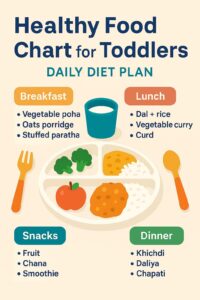
Healthy Food Chart for Toddlers (Daily Diet Plan)
Below is a sample Indian daily food chart for toddlers aged 1 to 5 years.
Morning (6:30 AM – 8:00 AM)
-
Warm milk
-
Soaked almonds (powdered)
-
Banana or apple slices
Breakfast (8:30 AM – 9:30 AM)
-
Vegetable poha / upma
-
Oats porridge with milk
-
Stuffed paratha with curd
Mid-Morning Snack (11:00 AM)
-
Seasonal fruit bowl
-
Coconut water / fresh juice
Lunch (1:00 PM – 2:00 PM)
-
Dal + roti / rice
-
1 vegetable curry
-
Curd / buttermilk
-
Small salad (cucumber, carrot)
Evening Snack (4:30 PM – 5:30 PM)
-
Roasted chana
-
Homemade fruit smoothie
-
Boiled corn
Dinner (7:30 PM – 8:30 PM)
-
Khichdi
-
Daliya / soft chapati with vegetable
-
Warm milk (optional)
Nutrient-Based Food Chart for Toddlers
✅ Proteins
-
Paneer
-
Curd
-
Eggs
-
Dal & pulses
-
Nuts (powdered form)
✅ Carbohydrates
-
Rice
-
Roti
-
Oats
-
Daliya
-
Potato
✅ Healthy Fats
-
Ghee
-
Butter (limit)
-
Nuts & seeds
✅ Vitamins & Minerals
-
Fruits
-
Green vegetables
-
Carrots
-
Tomatoes
-
Citrus fruits
Healthy Indian Foods List for Toddlers
Add these foods to your toddler’s weekly meal plan:
-
Khichdi
-
Vegetable paratha
-
Idli & dosa
-
Curd rice
-
Fruit chaat
-
Sprout salad
-
Paneer bhurji
-
Milkshakes
-
Homemade soups
Foods to Avoid for Toddlers
Avoid giving:
-
Chips and packaged snacks
-
Sugary drinks
-
Chocolates in excess
-
Cold drinks
-
Street food
-
Deep-fried items
How Much Food Should a Toddler Eat Daily?
Each toddler is different, but this is a basic guide:
| Age | Meals per Day |
|---|---|
| 1–2 years | 5 small meals |
| 3–5 years | 3 main + 2 snacks |
Tips to Improve Toddler Eating Habits
-
Offer food at fixed times
-
Avoid force feeding
-
Eat together as a family
-
Make food colorful
-
Reduce mobile use during meals
-
Introduce new foods slowly
Vegetable Khichdi Recipe
-
Rice + moong dal
-
Carrot, peas, potato
-
Small spoon ghee
Cook soft and serve lukewarm.
Banana Milkshake
-
1 banana
-
1 cup milk
-
Small amount of honey (2+ years only)
Common Toddler Feeding Problems and Solutions
Picky Eating
Give options, not pressure. Keep meals colorful.
Low Appetite
Stick to fixed mealtimes. Do not offer junk between meals.
Constipation
Increase fruit, water, and fiber.
Frequently Asked Questions (FAQs)
What is the best food for toddler brain development?
Milk, eggs, nuts, banana, and green vegetables.
Can toddlers eat eggs daily?
Yes, 1 egg a day is safe unless allergic.
Is milk compulsory daily?
Yes, milk provides calcium needed for bones.
Can toddlers eat junk food sometimes?
Very rarely, not as a habit.
How much water should a toddler drink?
At least 1 to 1.5 liters daily.
Conclusion
A healthy food chart for toddlers ensures complete nutrition, stronger immunity, and better development. By choosing natural and homemade foods, you help your toddler build a healthy future. Small changes in daily eating habits can make a big difference in your child’s growth journey.
Disclaimer
The information provided in this article is for general educational purposes only. Every child is different, and food needs may vary based on age, health condition, and growth pattern. This food chart is not a substitute for professional medical advice.
Parents are advised to consult a pediatrician or nutrition expert before making any major changes to their child’s diet, especially if the child has allergies, medical conditions, or special dietary needs.
The website is not responsible for any health issues caused by following this chart without proper medical guidance.